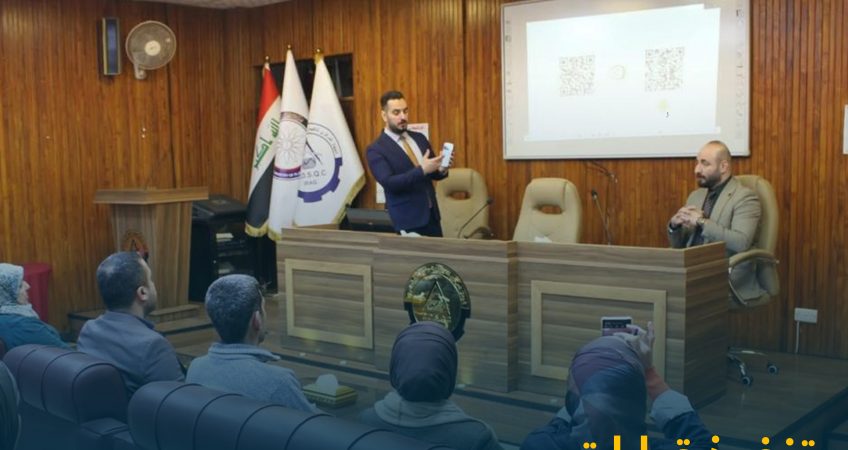
The Anti-Money Laundering and Counter Terrorism Financing Office, in cooperation and coordination with the Ministry of Planning / Central Organization for Standardization and Quality Control, held a specialized workshop entitled “Implementation of the Decisions of the Terrorist Funds Freezing Committee and the United Nations Security Council Resolutions” on Thursday, 5 February 2026.
The Anti-Money Laundering and Counter Terrorism Financing Office, in cooperation and coordination with the Ministry of Planning / Central Organization for Standardization and Quality Control, held a specialized workshop entitled “Implementation of the Decisions of the Terrorist Funds Freezing Committee and the United Nations Security Council Resolutions” on Thursday, 5 February 2026.
The workshop was attended by a number of employees of the Central Organization for Standardization and Quality Control and focused on reviewing the following key topics:
-
United Nations Security Council resolutions related to targeted financial sanctions.
-
Mechanisms for implementing the decisions of the Terrorist Funds Freezing Committee.
-
Presentation and hands-on training on the Office’s smart mobile application, which enables instant access and monitoring of individuals and entities listed on local and international freezing lists.
-
Responsibilities of supervisory and relevant authorities in the immediate implementation of international and national obligations.
-
The importance of strengthening coordination and information exchange between supervisory authorities, including the Central Organization for Standardization and Quality Control and the Office, and the goldsmiths sector, as well as companies and workshops dealing in precious metals, to ensure effective supervision and combat terrorism financing.
This workshop comes within the framework of joint efforts to enhance awareness of international standards requirements related to targeted financial sanctions and to promote a culture of compliance among supervisory institutions and high-risk sectors, particularly in monitoring the trade of precious metals and jewelry. These efforts aim to protect the national economy from the risks of terrorism financing and to strengthen financial security and economic stability in the Republic of Iraq.